The Coyote Carp Fly
Simple Pattern for Beginner Fly Tiers
Yes, you have heard of the legendary fly, but do you know where it came from? And now you have all the information you need to tie the killer Texas carp fly!
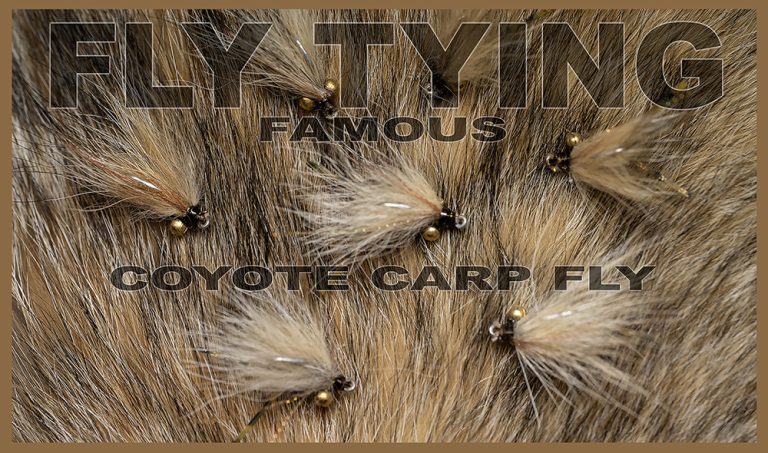
The Coyote Carp fly is a fly that has stood the test of time. My guru JH and I worked on this fly, and brought it to life in 2009. And we have been tying and letting it fly ever since. In all that time, I never took the time to do a video of the ORIGINAL version of the Coyote Carp fly. I guess that is because we got extremely busy … catching carp on the new pattern. The only version of this fly on YouTube is my 2009 Variant. That video, my first ever fly tying video, was reduced to two depressing pixels by YouTube back in the day when there was no bandwidth and YouTube was just a dream of what it is today. This version? I shot it intentionally HD at 4K and 60fps so that it renders sharp stills and video to the viewer who may want to freeze a frame, or slow motion portions of the SHORT video.
There really is nothing too hard about tying this fly, but it does have one or two pitfalls.
- The Bead Chain Eyes need special attention and I show you how to smooth that problem over.
- The hook eye can get clogged with guard fur. I have a great way, new to me, to reveal those eyes for easy tying on.
ENTOMOLOGY
We never pinned down what it is the Coyote Carp fly copies, and over the decades I have come to the conclusion it does NOT directly emulate any specific BUG carp eat year, after year after year. I believe it is a “stimulator” pattern that, to a carp looks like a snack, just more junk food that happens to be sitting on the counter while no one else is looking … yet.
It could be a dead crane fly? They appear by the millions on and around Lake Ray Roberts when conditions are right. It could be a dead and decaying grasshopper, like those great grasshopper swarms we get when conditions are right. Whatever it is, refusals are rare, few and far in between.
I would consider it a late spring and all summer pattern, if we talk seasonally. But there are those times, when I have to GO TO the Coyote … out of season, out of time, and it gets bit. I live and love those days.
Inside a Carp’s Head
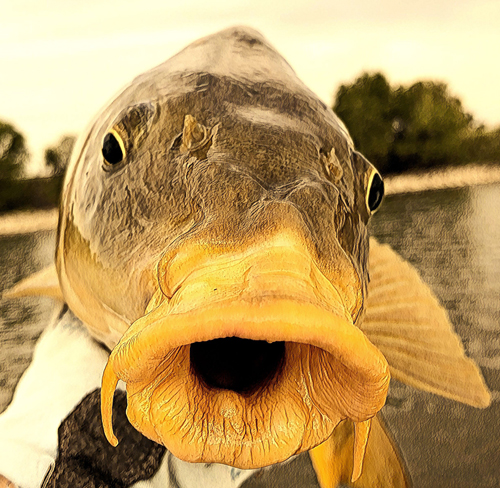
Carp senses are well documented. I have looked enough of them in the eye to know – their eyes are very active and articulate better than your garden run bass or redfish. Their eyes are not on top of their heads, nor are they on the bottom. But they protrude in such a way that gives them great ability to look UP and DOWN. So that’s just one more thing that makes them wary and slow inspectors of their meals.
They are also, of course, omnivores. If it looks right, feels pretty good and is just sitting there? It must be good, like a cheeto on the ground and the six second rule hasn’t expired. This means, it needs to be in range, before they see you, and it needs to seem almost always, like it was their good idea to eat it … something like incidental contact.
If you can get this fly in the right place, the right way? I’m saying … maybe there’s a chance. But don’t blame this fly! It’s proven to be a very good one over years of lab testing.
VISIT – MY FLY TYING STORE on AMAZON